
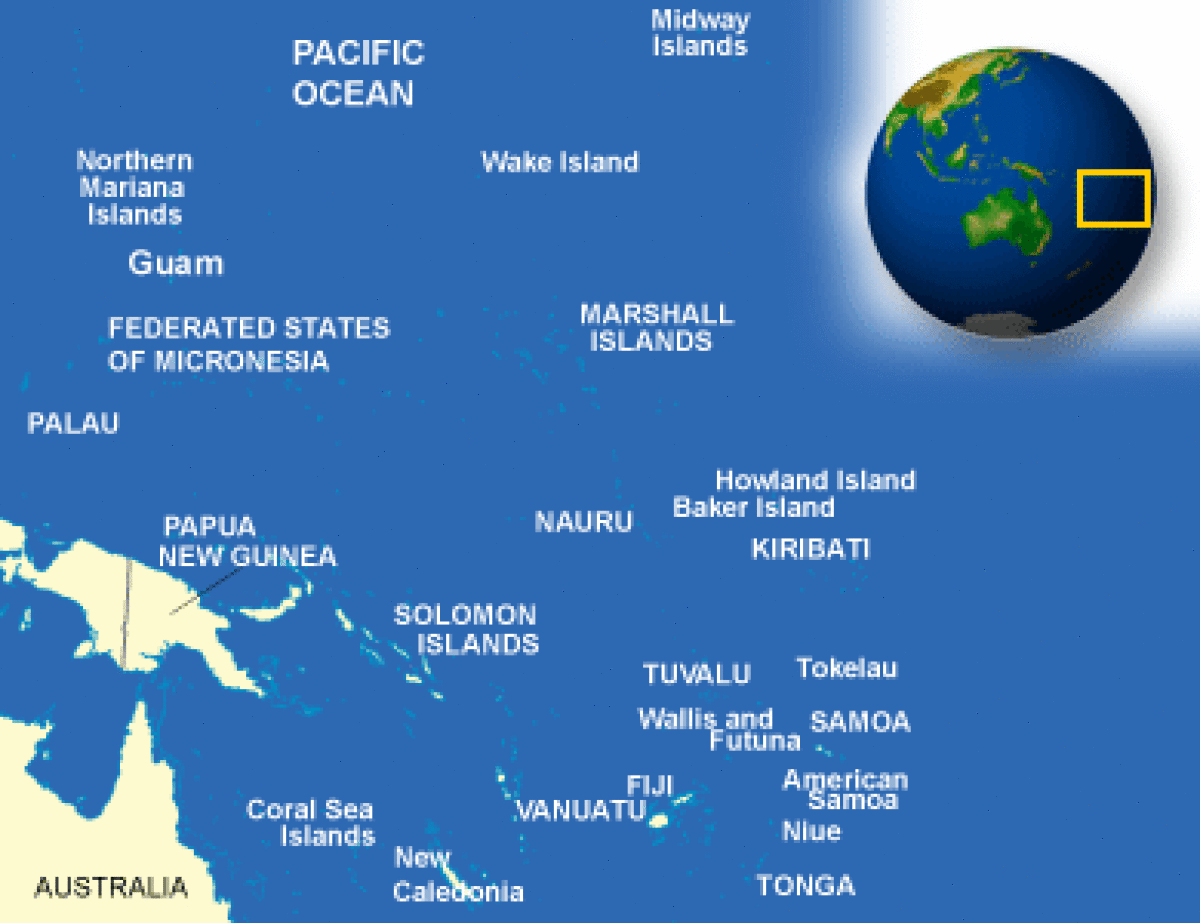
Where is Niue?
What countries border Niue?
Niue Weather
What is the current weather in Niue?

Niue Facts
What is the capital of Niue?
| Capital | Alofi |
| Government Type | parliamentary democracy |
| Currency | New Zealand Dollar (NZD) |
| Total Area |
100 Square Miles 260 Square Kilometers |
| Location | Oceania, island in the South Pacific Ocean, east of Tonga |
| Language | Niuean, a Polynesian language closely related to Tongan and Samoan; English |
| GDP - real growth rate | 6.2% |
| GDP - per capita (PPP) | $5,800.00 (USD) |
Niue Demographics
What is the population of Niue?
| Ethnic Groups | Polynesian (with some 200 Europeans, Samoans, and Tongans) |
| Nationality Noun | Niuean(s) |
| Population | 2,000 |
| Population Growth Rate | -0.03% |
| Urban Population | 37.900000 |
Niue Government
What type of government does Niue have?
| Suffrage | 18 years of age; universal |
| National Holiday | Waitangi Day (Treaty of Waitangi established British sovereignty over New Zealand), 6 February (1840) |
| Constitution |
history: several previous (New Zealand colonial statutes); latest 19 October 1974 (Niue Constitution Act 1974) amendments: proposed by the Assembly; passage requires at least two-thirds majority vote of the Assembly membership in each of three readings and approval by at least two-thirds majority votes in a referendum; passage of amendments to a number of sections, including Niue’s self-governing status, British nationality and New Zealand citizenship, external affairs and defense, economic and administrative assistance by New Zealand, and amendment procedures, requires at least two-thirds majority vote by the Assembly and at least two thirds of votes in a referendum; amended 1992, 2007; note - in early 2021, the constitution review committee of the Assembly requested suggestions from the public about changes to the constitution |
| Independence | 19 October 1974 (Niue became a self-governing parliamentary government in free association with New Zealand) |
Niue Video
CountryReports YouTube Channel:
Join CountryReports YouTube Channel (Click Here)Niue Geography
What environmental issues does Niue have?
| Climate | tropical; modified by southeast trade winds |
| Environment - Current Issues | increasing attention to conservationist practices to counter loss of soil fertility from traditional slash and burn agriculture |
| Environment - International Agreements | party to: Biodiversity, Climate Change, Climate Change-Kyoto Protocol, Desertification, Law of the Sea, Ozone Layer Protection |
| Terrain | steep limestone cliffs along coast, central plateau |
Niue Economy
How big is the Niue economy?
| Economic Overview |
The economy suffers from the typical Pacific island problems of geographic isolation, few resources, and a small population. The agricultural sector consists mainly of subsistence gardening, although some cash crops are grown for export. Industry consists primarily of small factories for processing passion fruit, lime oil, honey, and coconut cream. The sale of postage stamps to foreign collectors is an important source of revenue. Government expenditures regularly exceed revenues, and the shortfall is made up by critically needed grants from New Zealand that are used to pay wages to public employees. Economic aid allocation from New Zealand in FY13/14 was US$10.1 million. Niue has cut government expenditures by reducing the public service by almost half. The island in recent years has suffered a serious loss of population because of emigration to New Zealand. Efforts to increase GDP include the promotion of tourism and financial services, although the International Banking Repeal Act of 2002 resulted in the termination of all offshore banking licenses. |
| Industries | tourism, handicrafts, food processing |
| Currency Name and Code | New Zealand Dollar (NZD) |
| Export Partners | NZ mainly, Fiji, Cook Islands, Australia |
| Import Partners | NZ mainly, Fiji, Japan, Samoa, Australia, US |
Niue News and Current Events
What current events are happening in Niue?
Source: Google News
World Regions
All Countries
Afghanistan
Akrotiri
Albania
Algeria
American Samoa
Andorra
Angola
Anguilla
Antarctica
Antigua and Barbuda
Argentina
Armenia
Aruba
Australia
Austria
Azerbaijan
Bahamas
Bahrain
Bangladesh
Barbados
Belarus
Belgium
Belize
Benin
Bermuda
Bhutan
Bolivia
Bosnia and Herzegovina
Botswana
Brazil
British Indian Ocean Territory
British Virgin Islands
Brunei
Bulgaria
Burkina Faso
Burma
Burundi
Cabo Verde
Cambodia
Cameroon
Canada
Cayman Islands
Central African Republic
Chad
Chile
China
Christmas Island
Clipperton Island
Cocos (Keeling) Islands
Colombia
Comoros
Congo, Democratic Republic of the
Congo, Republic of the
Cook Islands
Coral Sea Islands
Costa Rica
Cote d’Ivoire
Croatia
Cuba
Curacao
Cyprus
Czech Republic
Denmark
Dhekelia
Djibouti
Dominica
Dominican Republic
Ecuador
Egypt
El Salvador
Equatorial Guinea
Eritrea
Estonia
Eswatini
Ethiopia
Falkland Islands
Faroe Islands
Fiji
Finland
France
French Guiana
French Polynesia
Gabon
Gambia, The
Gaza Strip
Georgia
Germany
Ghana
Gibraltar
Greece
Greenland
Grenada
Guadeloupe
Guam
Guatemala
Guernsey
Guinea
Guinea-Bissau
Guyana
Haiti
Holy See
Honduras
Hong Kong
Hungary
Iceland
India
Indonesia
Iran
Iraq
Ireland
Isle of Man
Israel
Italy
Jamaica
Jan Mayen
Japan
Jersey
Jordan
Kazakhstan
Kenya
Kiribati
Korea, North
Korea, South
Kosovo
Kuwait
Kyrgyzstan
Laos
Latvia
Lebanon
Lesotho
Liberia
Libya
Liechtenstein
Lithuania
Luxembourg
Macau
Madagascar
Malawi
Malaysia
Maldives
Mali
Malta
Marshall Islands
Martinique
Mauritania
Mauritius
Mayotte
Mexico
Micronesia
Moldova
Monaco
Mongolia
Montenegro
Montserrat
Morocco
Mozambique
Namibia
Nauru
Nepal
Netherlands
New Caledonia
New Zealand
Nicaragua
Niger
Nigeria
Niue
Norfolk Island
North Macedonia
Northern Mariana Islands
Norway
Oman
Pakistan
Palau
Panama
Papua New Guinea
Paraguay
Peru
Philippines
Pitcairn Islands
Poland
Portugal
Puerto Rico
Qatar
Reunion
Romania
Russia
Rwanda
Saint Helena, Ascension, and Tristan da Cunha
Saint Kitts and Nevis
Saint Lucia
Saint Pierre and Miquelon
Saint Vincent and the Grenadines
Samoa
San Marino
Sao Tome and Principe
Saudi Arabia
Senegal
Serbia
Seychelles
Sierra Leone
Singapore
Slovakia
Slovenia
Solomon Islands
Somalia
South Africa
Spain
Sri Lanka
Sudan
Sudan, South
Suriname
Svalbard
Sweden
Switzerland
Syria
Taiwan
Tajikistan
Tanzania
Thailand
Timor-Leste
Togo
Tokelau
Tonga
Trinidad and Tobago
Tunisia
Turkey
Turkmenistan
Turks and Caicos Islands
Tuvalu
Uganda
Ukraine
United Arab Emirates
United Kingdom
United States (US)
Uruguay
Uzbekistan
Vanuatu
Venezuela
Vietnam
Virgin Islands
Wake Island
Wallis and Futuna
West Bank
Western Sahara
World
Yemen
Zambia
Zimbabwe